What is Bath Salt — and How to Use It
Updated April 2026
Bath salt isn't a single thing. The category covers Epsom, Himalayan, Dead Sea, dendritic, and several others — each with a different mineral profile and a different effect on the body. Understanding the difference is what separates a bath that feels nice from one that actually changes how you feel afterward.
Here's the complete guide.
Pre-blended for ritual use.
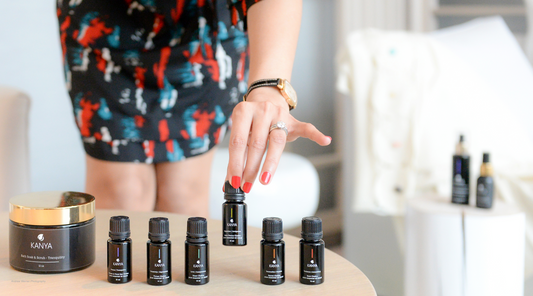
Kanya's Bath Soaks & Scrubs combine Epsom + Himalayan + Dead Sea salts with chakra-aligned essential oils — no mixing required.
Shop Bath Soaks & Scrubs →The four main types
Epsom Salt (Magnesium Sulfate)
Despite the name, Epsom isn't technically a salt — it's magnesium sulfate. It's the most studied for muscle recovery: magnesium relaxes muscles, reduces inflammation, and supports nervous system regulation. The most useful single addition to a bath if you're sore or stressed.
Use 1–2 cups per bath.
Himalayan Pink Salt
Mined from ancient seabeds in Pakistan, Himalayan salt is colored by trace minerals — iron, magnesium, calcium, potassium. It's gentler on skin than table salt and adds a subtle mineral profile to bathwater. The pink color comes from oxidized iron, not artificial dye.
Use 1 cup per bath.
Dead Sea Salt
The most mineral-dense bath salt available. Dead Sea salt has been studied for psoriasis, eczema, and joint inflammation — its high concentration of magnesium, potassium, and calcium chloride supports skin barrier repair. Stronger than Epsom or Himalayan; use less.
Use 1/2 cup per bath.
Dendritic Salt
Dendritic salt has a tree-branched crystal structure (hence "dendritic") that helps it dissolve faster and bind better with essential oils. You won't see this on supermarket shelves, but quality bath blends include it because it improves how cleanly the oils disperse in water.
How to use bath salts
- Run the bath. Comfortably warm, not hot — extremely hot water dries the skin.
- Add salts after the tub fills. They dissolve faster in already-warm water.
- Add 8–10 drops of essential oil after the salts — they help disperse the oil evenly.
- Soak for 15–20 minutes. Long enough for the magnesium to absorb (yes, magnesium absorbs through the skin).
- Rinse briefly to wash off salt residue, then pat dry. Don't scrub off the oil — let it soak in.
Combining with essential oils
Salts are the foundation; essential oils are the active aromatherapy layer. The combination is more effective than either alone — the steam carries the aroma, the salts relax the muscles, and the oils penetrate the now-warm, hydrated skin.
Kanya's two Bath Soaks & Scrubs are pre-blended for two distinct intentions:
- Sensual — Dead Sea + Epsom + Dendritic salts with cocoa butter, plus Geranium, Peppermint, Ylang Ylang, Cedarwood, and Bergamot. For sacral/heart energy.
- Tranquility — Same salt base with shea butter, plus Lavender, Myrrh, Frankincense, and Holy Basil. For crown/third eye / I Am Peace.
Building a chakra ritual bath
If you want to go beyond a regular salt soak: pair the salts with a chakra-specific essential oil blend, a candle, and a few minutes of intention. The combination of warm water, mineral absorption, aromatherapy, and quiet attention does what twenty minutes of massage can do.
For the full step-by-step ritual, see our chakra ritual bath guide.
Continue reading
- How to Balance Your Chakras with a Ritual Bath
- Essential Oils for Each of Your Chakras
- 9 Body Oil Myths Debunked
Which intention is yours?
Take the 60-second Intention Quiz — a few questions that match you to the chakra blend made for how you want to feel.
Find Your Intention →